
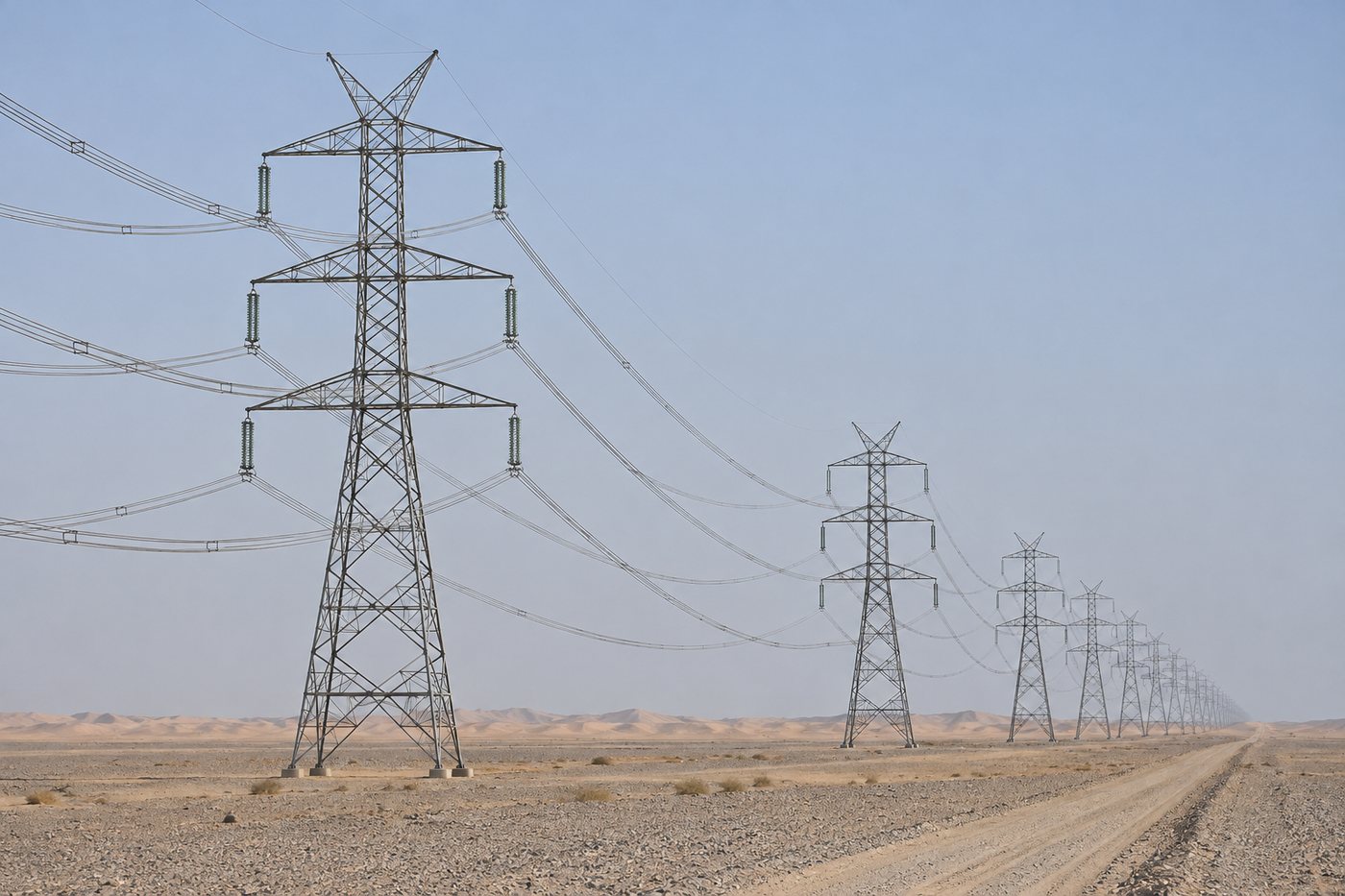
- The sequence is: segregate and shift the steel, accept the foundation, assemble sections on the ground, lift, plumb, torque, lock, inspect.
- Sorting errors at the laydown yard are the most common cause of lost days at the tower.
- Bolts are torqued only after the tower is complete and its verticality is checked, then locked so they cannot work loose.
- A tower is released for stringing against records: verticality, torque checks, galvanizing repair and earthing.
1. Segregation and shifting
A lattice tower arrives as bundles of galvanized angle members, plates and bolts, each stamped with a member mark. One line uses several tower types, such as suspension, angle, tension and terminal towers, and each type comes with different body and leg extensions to suit the ground profile.
Segregation means sorting that steel tower by tower against the erection drawing and the bill of material, so that every location receives a complete set. A short or wrong member discovered at height stops the crane and the crew. Checking completeness at the yard costs far less than finding the gap at the tower.
The sorted sets are then shifted to each tower location. On long lines through desert or mountain terrain this is a logistics task of its own: access tracks, suitable trucks, and stacking on timber so the galvanizing is not damaged.
2. Accepting the foundation
Erection does not start until the foundation is handed over. The crew checks the stub or anchor-bolt setting, including levels, back-to-back dimensions and diagonals, against the drawing, and confirms that the concrete has reached the strength the specification requires before it takes erection loads. A tower built on a stub that is out of position will not close at the top.
3. Ground assembly
Sections of the tower are assembled on level ground beside the foundation, supported on timber packing. Bolts are fitted but left snug, not fully tight, so the section can still be aligned when it meets the one below.
Members are never forced, re-drilled or flame-cut to fit. A member that does not fit is a fabrication or sorting problem and is reported, because forcing it damages the galvanizing and builds stress into the structure.
4. Lifting
Where a crane can reach the location, assembled sections are lifted and bolted in sequence from the legs up. Where access does not allow a crane of the needed size, towers are built member by member or in small panels using a gin pole or derrick.
Towers on 500 kV lines are taller and heavier than those on 380 kV lines, with wider bases and longer cross-arms. That means larger cranes, heavier sections, more ground preparation for the crane and stricter lift planning. Every lift follows a lift plan with defined rigging, tag lines, an exclusion zone and a wind limit above which work stops.
5. Plumbing, torquing and locking
When the tower is complete, its verticality is measured and corrected. Only then are the bolts tightened, working from the bottom upward, to the torque the owner specifies for each bolt diameter, using calibrated torque wrenches. Tightened bolts are marked so that none is missed.
The nuts are then locked according to the specification, commonly with pal nuts, and on the lower part of the tower with anti-theft measures. Step bolts, anti-climbing devices, number and danger plates are fitted, and the tower is connected to its earthing with the footing resistance measured and recorded.
6. What the inspector checks
- Verticality within the specified tolerance
- No missing members, bolts, washers or locking nuts
- Sample torque checks with a calibrated wrench
- Galvanizing damage repaired with the approved zinc-rich coating
- Earthing connections and footing resistance records
- Plates, step bolts and anti-climbing devices in place
A tower is released for stringing only when these records are complete.
Where ETC fits
ETC works as a tower-works subcontractor on 380 kV and 500 kV lines in Saudi Arabia. Our crews carry out tower segregation and shifting, ground assembly, erection, bolt tightening and torquing to the owner's standard, and pal-nut installation, and mobilise to wherever the line runs.